
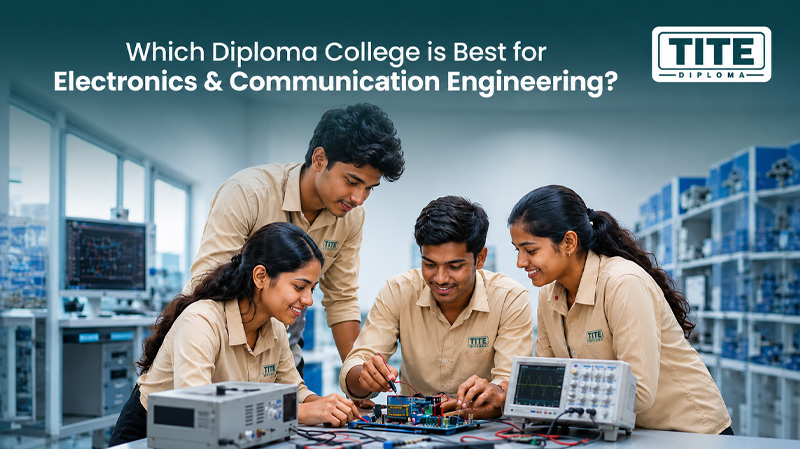
Which Diploma College is Best for Electronics & Communication Engineering?
Summary: Selecting the right Electronics & Communication Engineering diploma college lays the foundation for a successful technical career. Practical learning, experienced faculty, modern laboratories and industry exposure help students develop job-ready skills. TITE offers an industry-oriented learning environment with hands-on training, internship opportunities, placement support, and guidance for higher education.
The rapid growth of automation, telecommunications, IoT, embedded systems and consumer electronics has significantly increased the demand for skilled Electronics & Communication Engineering (ECE) professionals across India. As a result, many students are exploring Electronics and communication diploma colleges in Bhubaneswar to build a strong technical foundation after Class 10\. While selecting a college, it is important to look beyond academics and evaluate factors such as modern laboratories, experienced faculty, practical training, industry exposure, placement assistance and opportunities for higher education to ensure long-term career success.
If you are looking for an institution that combines industry-oriented learning with hands-on technical education, exploring the programs offered by TITE Diploma can be a good starting point. As an AICTE-approved and SCTE\&VT-affiliated diploma institution, TITE focuses on practical learning, skill development and career readiness through modern infrastructure, experienced faculty, workshops, industrial visits and placement support, helping students prepare for the evolving electronics and communication industry.
What is Electronics & Communication Engineering (ECE)?
Electronics & Communication Engineering (ECE) is a branch of engineering that focuses on the design, development, testing and maintenance of electronic devices and communication systems. A diploma in ECE equips students with both theoretical knowledge and practical skills, enabling them to understand how modern electronic equipment, communication networks, and digital technologies function in real-world applications.
The diploma in Electronics & Communication Engineering curriculum typically includes subjects such as Electronic Circuits, Digital Electronics, Microprocessors & Microcontrollers, Communication Systems, Embedded Systems and the basics of the Internet of Things (IoT). Along with classroom learning, students gain hands-on experience through laboratory sessions, technical projects, workshops and industrial exposure, helping them build industry-relevant skills.
Graduates can pursue careers in industries such as telecommunications, consumer electronics, automation, manufacturing, embedded systems, IoT, power electronics and semiconductor technology. With the growing demand for skilled professionals, students seeking admission to Diploma in ECE colleges in Odisha can access quality technical education that prepares them for employment as well as higher studies in engineering.
Why Choosing the Right Diploma College Matters
Choosing the right diploma college is one of the most important decisions for students planning a career in Electronics & Communication Engineering. A quality institution not only provides strong academic knowledge but also offers practical training, industry exposure and career guidance that prepare students for both employment and higher education.
Practical Learning Beyond Classrooms
A good diploma college emphasizes hands-on learning alongside classroom teaching. Well-equipped laboratories, practical sessions, mini projects, and workshops help students understand electronic concepts better and develop the technical skills required in the industry.
Experienced Faculty & Technical Mentorship
Qualified and experienced faculty play an important role in shaping a student's academic and professional journey. They provide conceptual clarity, practical guidance, project support and mentorship that helps students stay updated with emerging technologies.
Industry Exposure Through Projects & Visits
Industrial visits, live projects, technical seminars, and interaction with industry experts bridge the gap between classroom learning and real-world applications. Such exposure enables students to understand workplace practices and current industry trends.
Placement Assistance & Career Guidance
Colleges that offer placement support, career counseling, resume-building sessions, and interview preparation help students become job-ready. These initiatives improve confidence and increase employment opportunities in electronics, telecommunications, automation, and related sectors.
Opportunities for Higher Education (Lateral Entry to B.Tech)
Many diploma graduates choose to continue their education through lateral entry into the second year of a B.Tech program. Selecting a college with a strong academic foundation and proper guidance can make the transition to higher education smoother while expanding future career prospects.
Factors to Consider While Choosing an ECE Diploma College
When comparing the Best electronics diploma colleges in Bhubaneswar, students should evaluate multiple factors that contribute to quality education, practical skill development, and long-term career growth. Consider the following:
- AICTE approval and SCTE\&VT affiliation to ensure the diploma program meets recognized academic and industry standards.
- Well-equipped Electronics & Communication laboratories with modern instruments and equipment for hands-on practical learning.
- An industry-oriented curriculum that includes emerging technologies such as embedded systems, IoT, communication networks, and digital electronics.
- Internship opportunities that allow students to gain real-world industry experience and apply classroom concepts in professional settings.
- Campus placement support, including career counseling, aptitude training, resume preparation, and interview guidance to improve employability.
- Technical workshops, seminars, and expert sessions that expose students to the latest developments in the electronics and communication sector.
- Participation in technical competitions and hackathons to enhance innovation, teamwork, and problem-solving skills.
- Focus on communication skills and personality development, enabling students to perform confidently during interviews and in the workplace.
- Experienced faculty and mentoring support to guide students academically, technically, and professionally throughout the diploma program.
- Modern campus infrastructure and learning resources that create a productive environment for both theoretical and practical education.
Career Opportunities After Diploma in Electronics & Communication Engineering
A Diploma in Electronics & Communication Engineering opens doors to diverse career opportunities across both public and private sectors. With industries increasingly adopting advanced electronic systems, automation and digital communication technologies, skilled ECE diploma holders are in demand for technical, maintenance, production and support roles.
| Career Area | Opportunities for Diploma Holders |
|---|---|
| Core Electronics Industries | Work as Electronics Technician, Service Engineer, Production Technician, Quality Control Technician or Maintenance Engineer in electronics manufacturing and assembly units. |
| Telecommunications | Join telecom companies as Network Support Technician, Field Service Engineer, Communication Technician, or Fiber Optic Technician to install, maintain and troubleshoot communication networks. |
| Consumer Electronics | Build a career in companies manufacturing or servicing televisions, smartphones, home appliances, audio systems and other electronic devices as a Service or Testing Technician. |
| Embedded Systems & IoT | Assist in the development, testing, programming, and maintenance of embedded systems, microcontroller-based devices, smart gadgets and IoT-enabled applications. |
| Automation & Manufacturing | Work in industrial automation, process control, robotics support, PLC-based systems, instrumentation and electronic maintenance across manufacturing industries. |
| Government Sector Opportunities | Apply for technical positions in government departments, public sector undertakings (PSUs), railways, defence organizations, power utilities and telecommunications through competitive recruitment processes. |
| Higher Education Options | Pursue lateral entry into the second year of a B.Tech/B.E. program in Electronics & Communication Engineering or related disciplines. Students may also opt for certification courses in embedded systems, VLSI, networking, IoT, robotics or automation to enhance career prospects. |
Skills Every Electronics & Communication Engineering Student Should Develop
Students pursuing a diploma from Diploma in ECE colleges in Odisha should focus on developing both technical expertise and professional skills to stay competitive in the rapidly evolving electronics industry. A strong skill set enables graduates to handle real-world engineering challenges, adapt to emerging technologies, and improve their employability across various sectors.
Some of the essential skills every ECE diploma student should develop include:
- Circuit Designing – Understanding and designing basic electronic circuits.
- PCB Fundamentals – Learning printed circuit board design, assembly, and testing.
- Embedded Programming – Working with microcontrollers and embedded systems using programming languages like C.
- Problem-Solving – Identifying technical issues and implementing effective solutions.
- Communication Skills – Clearly conveying technical ideas and collaborating with teams.
- Teamwork – Working efficiently with colleagues during projects and industrial assignments.
- Analytical Thinking – Evaluating electronic systems and making informed technical decisions.
- Troubleshooting – Diagnosing and repairing faults in electronic circuits and communication systems.
- Basic Coding – Developing foundational programming skills for embedded and automation applications.
- Adaptability to Emerging Technologies – Staying updated with advancements such as IoT, AI, automation, and smart electronics.
Why TITE Can Be a Good Choice for Electronics & Communication Engineering
Choosing the right institution is essential for building a successful career in Electronics & Communication Engineering. Besides academic excellence, students should look for a college that offers practical training, industry exposure, career guidance, and opportunities to develop both technical and professional skills. TITE provides an industry-focused learning environment that aims to prepare students for the evolving electronics sector.
Some of the key features of TITE's Electronics & Communication Engineering diploma program include:
- AICTE-approved and SCTE\&VT-affiliated diploma program, ensuring quality technical education and recognized qualifications.
- Industry-oriented curriculum designed to keep pace with current developments in electronics, communication systems, embedded technology, and digital applications.
- Well-equipped laboratories that provide hands-on practical experience with modern electronic instruments and equipment.
- Exposure to embedded systems, communication engineering, and simulation tools through practical sessions, projects, and laboratory exercises.
- Experienced faculty members who combine academic knowledge with industry insights to guide students throughout the program.
- Industrial visits, technical workshops, seminars, and expert sessions that help students understand real-world engineering practices.
- Internship opportunities and placement assistance to enhance employability and prepare students for technical roles in various industries.
- Guidance for higher education, including support for students planning to pursue B.Tech through lateral entry after completing their diploma.
- Emphasis on technical, communication, and professional skill development, enabling students to become industry-ready and adapt to emerging technologies.
Choosing the right Electronics & Communication Engineering diploma college is an important step toward building a successful technical career. Before making a decision, students should evaluate factors such as AICTE approval, modern laboratories, experienced faculty, industry-oriented curriculum, internship opportunities, placement support, and pathways for higher education. A balanced combination of academic learning and practical exposure helps students develop the skills required by today's electronics industry.
Institutions like TITE strive to offer industry-focused technical education through hands-on training, well-equipped laboratories, technical workshops, industrial visits, skill development initiatives and placement assistance. Students who wish to begin their journey in Electronics & Communication Engineering can learn more about the online application process thereby taking the first step toward a career in the rapidly evolving electronics and communication sector.
-
-

-
.jpg) Mining Engineering Diploma Course With Practical Field Training August 21, 2026
Mining Engineering Diploma Course With Practical Field Training August 21, 2026 -
-