
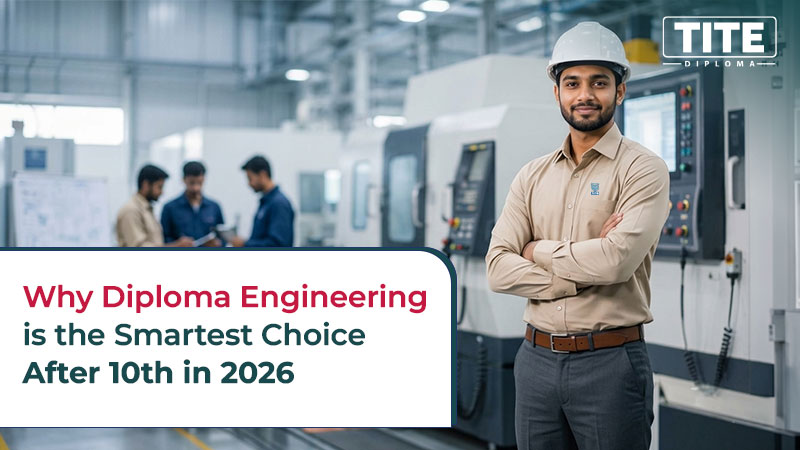
Why Diploma Engineering is the Smartest Choice After 10th in 2026
Summary: Choosing the right career after Class 10 can shape a student's future, and diploma engineering has emerged as one of the most practical and rewarding options in 2026. With an industry-focused curriculum, hands-on training, internships and faster entry into the workforce, diploma programmes equip students with the technical skills that employers value most. This article explores the key advantages of pursuing diploma engineering after the 10th, including career opportunities, higher education pathways through lateral entry, affordability and the growing demand for skilled engineers across various industries. It also highlights why selecting a reputed institution among the diploma engineering colleges in Bhubaneswar is essential for building a successful engineering career.
The career landscape is evolving faster than ever before. With industries embracing Artificial Intelligence, automation, smart manufacturing and digital technologies, employers are looking beyond traditional academic qualifications and prioritising practical skills, technical expertise and job-ready professionals. As a result, many students are now choosing skill-based education over conventional academic pathways. Among the leading Diploma engineering colleges in Bhubaneswar, TITE Diploma offers industry-oriented diploma programmes that prepare students for real-world engineering careers. If your goal is to build a successful career soon after Class 10 while keeping the option of higher education open, diploma engineering is one of the smartest choices in 2026. It combines practical learning, affordable education, excellent placement opportunities and seamless lateral entry into B.Tech programmes.
What Is Diploma Engineering?
Diploma Engineering, also known as Polytechnic Engineering, is a professional technical programme designed for students who wish to begin their engineering journey immediately after completing Class 10. The regular diploma programme typically spans three years (six semesters), while students who have completed an ITI certificate in a relevant trade may be eligible for lateral entry into the second year, depending on the admission policies of the respective state and institution. Admissions are generally based on merit or state-level entrance examinations, with reservation benefits applicable as per Central and State Government norms. The curriculum combines classroom learning with practical laboratory sessions, industrial training, workshops, internships, and project-based learning, enabling students to acquire industry-ready technical skills from an early stage.
Diploma engineering offers a wide range of specialisations to suit different career interests and emerging industry demands. Popular polytechnic streams include Mechanical Engineering, Civil Engineering, Electrical Engineering, Electronics & Communication Engineering (ECE), Computer Science Engineering (CSE), Automobile Engineering, Artificial Intelligence & Machine Learning (AI & ML), Mechatronics Engineering, Electrical & Electronics Engineering, and Mining Engineering, among others. After successful completion, students receive a recognised diploma awarded by the affiliating State Council of Technical Education or examining authority. To ensure quality education and national recognition, students should always choose institutions that are approved by the AICTE and affiliated with the appropriate State Technical Education Board, as these credentials are essential for higher education opportunities, government recruitment, and employment in leading industries.
Why 2026 Is a Great Year to Choose Diploma Engineering
The engineering landscape in India is evolving rapidly, making 2026 one of the best times to pursue a diploma in engineering. With the rise of smart manufacturing, Artificial Intelligence (AI), electric vehicles (EVs), renewable energy, automation, robotics, semiconductor manufacturing, and digital infrastructure, industries are actively looking for technically skilled professionals who can contribute from day one. According to reports from the Ministry of Skill Development and Entrepreneurship (MSDE) and AICTE, India's growing industrial sector requires a large workforce of mid-level engineers, technicians, and skilled professionals to meet future demands.
Growing Industry Demand for Skilled Engineers and Technicians
The demand for diploma engineers is increasing rapidly as industries adopt Artificial Intelligence (AI), automation, electric vehicles (EVs), renewable energy, robotics, and smart manufacturing technologies. According to initiatives led by the Ministry of Skill Development & Entrepreneurship (MSDE) and AICTE, India requires a large pool of technically skilled professionals to support its expanding industrial ecosystem. This is why many students are now opting for Diploma courses in Bhubaneswar after 10th to gain practical engineering knowledge at an early stage.
Industries actively hiring diploma engineers include:
- Manufacturing and Production
- Construction and Infrastructure
- Information Technology (IT)
- Automobile Industry
- Renewable Energy
- Railways and Metro Projects
- Public Sector Undertakings (PSUs)
- Electronics and Telecommunications
Faster Route to Employment
Unlike traditional engineering pathways that require students to complete Class 12 before pursuing a B.Tech degree, diploma engineering allows students to begin their technical education immediately after Class 10. The three-year programme enables students to enter the workforce earlier while also keeping higher education options open.
Major advantages include:
- Complete the diploma in just 3 years
- Start earning at a younger age
- Gain practical industry experience early
- Eligible for lateral entry into the second year of B.Tech
- Save both time and education costs
Industry-Focused Curriculum and Government Support
Diploma programmes in 2026 are designed to meet current industry requirements rather than relying only on classroom theory. AICTE-approved institutions are increasingly integrating practical learning, internships, digital technologies, innovation, and entrepreneurship into their curriculum. Government initiatives such as PMKVY, Skill India Mission, Digital India, and the National Education Policy (NEP) 2020 further strengthen technical education by promoting skill-based learning and employability.
Students benefit from:
- Modern laboratories and workshops
- Internship and industrial training opportunities
- Industry-oriented curriculum
- Project-based learning
- Entrepreneurship and innovation programmes
- Better employability through skill development initiatives
Cost-Effective Education with Excellent Career Growth
Diploma engineering offers one of the best returns on educational investment. Compared to long-duration professional degree programmes, it is more affordable while providing excellent placement opportunities and multiple career pathways. Students can either begin working immediately after graduation or continue their studies through lateral entry into B.Tech programmes.
Choosing one of the private diploma colleges in Bhubaneswar further enhances career prospects by offering quality education, experienced faculty, advanced laboratories, industry collaborations, internships and dedicated placement support.
Why diploma engineering is a smart investment in 2026:
- Affordable course fees
- Earlier employment opportunities
- Strong industry demand
- Higher education through lateral entry
- Better return on investment (ROI)
- Long-term career growth across multiple engineering sectors
Benefits of Choosing Diploma Engineering After 10th
Students who choose reputed institutions among the best diploma colleges in Bhubaneswar benefit from quality education, practical training, industry collaborations, and dedicated placement support, giving them a strong competitive advantage in today's evolving engineering job market.
Faster Entry into the Workforce
One of the biggest advantages of diploma engineering is the shorter duration of the programme. Unlike traditional degree courses, students can complete their diploma in three years after Class 10 and become eligible for employment much earlier.
Benefits include:
- Complete your technical education in just three years.
- Start your professional career at an early age.
- Gain valuable industry experience before many of your peers complete graduation.
- Build a strong foundation for long-term career growth.
Practical, Hands-on Learning
Diploma engineering focuses more on practical knowledge than theoretical concepts. Students spend significant time in laboratories, workshops, and project-based learning environments, helping them develop real engineering skills.
Students gain exposure to:
- Modern engineering laboratories
- Machine handling and workshop practice
- Live technical projects
- Computer-aided design (CAD) and engineering software
- Industrial equipment and tools
- Problem-solving through practical applications
Internship and Apprenticeship Opportunities
Most diploma programmes include internships, industrial visits, and apprenticeship training as part of the curriculum. These experiences help students understand workplace expectations while improving their technical and professional skills.
Advantages include:
- Real-world industry exposure
- Hands-on experience before graduation
- Better understanding of engineering operations
- Improved employability and placement opportunities
- Stronger professional networking
Affordable Education
Diploma engineering is a cost-effective option for students who want quality technical education without the financial burden of longer professional programmes. Along with lower tuition fees, students also save on overall educational expenses by entering the workforce earlier.
Financial benefits include:
- Lower tuition fees compared to many professional degree courses
- Reduced living and accommodation costs
- Faster return on educational investment
- Opportunity to earn sooner and support higher studies
Flexible Higher Education Pathways
Completing a diploma does not limit your educational opportunities. Instead, it opens multiple pathways for academic and professional advancement.
Students can choose to:
- Take lateral admission into the second year of B.Tech programmes
- Pursue advanced diploma or specialised certification courses
- Prepare for competitive government examinations
- Continue higher studies in engineering or management
- Build specialised skills through industry certifications
Early Financial Independence
Starting a career at a younger age allows diploma graduates to become financially independent much earlier. Many students secure employment immediately after completing their diploma, while others continue higher education alongside gaining work experience.
Long-term advantages include:
- Early earning potential
- Valuable work experience
- Better financial planning
- Reduced dependency on family
- Improved career growth opportunities
Top Diploma Specializations in 2026
Choosing the right diploma specialisation is an important step toward building a successful engineering career. In 2026, industries are actively seeking skilled diploma engineers in both traditional and emerging technologies. The table below highlights some of the most in-demand diploma specialisations, their career scope, and the industries that commonly hire graduates.
| Diploma Specialization | Why Choose It? | Popular Job Roles | Industries That Hire |
|---|---|---|---|
| Computer Science & Engineering | High demand due to rapid digital transformation and software development opportunities. | Software Developer, Technical Support Engineer, Web Developer, System Administrator | IT Companies, Software Firms, Start-ups, FinTech, E-commerce |
| Electronics & Communication Engineering | Excellent career opportunities in embedded systems, IoT, telecommunications, and electronics manufacturing. | Electronics Technician, Embedded Systems Engineer, Network Technician, Telecom Engineer | Telecommunications, Consumer Electronics, IoT, Semiconductor Industry |
| Mechanical Engineering | One of the most versatile engineering branches with opportunities across manufacturing and industrial sectors. | Production Engineer, Maintenance Engineer, Quality Control Technician, CAD Designer | Manufacturing, Automotive, Heavy Engineering, Robotics, Aerospace |
| Civil Engineering | Growing demand due to infrastructure development, highways, metro projects, and smart city initiatives. | Site Engineer, Surveyor, Construction Supervisor, Quality Inspector | Construction Companies, Infrastructure Projects, Real Estate, Government Departments |
| Electrical Engineering | Increasing demand with the growth of renewable energy, smart grids, and industrial automation. | Electrical Technician, Maintenance Engineer, Power Plant Technician, Electrical Supervisor | Power Generation, Renewable Energy, Utilities, Manufacturing Industries |
| Artificial Intelligence & Machine Learning (AI & ML) (where available) | One of the fastest-growing technology domains with excellent future career prospects. | AI Technician, Machine Learning Assistant, Data Analyst, AI Support Engineer | AI Start-ups, IT Companies, Automation, Healthcare Technology, FinTech |
| Data Science | Ideal for students interested in data analytics, business intelligence, and predictive technologies. | Data Analyst, Business Intelligence Executive, Data Technician | IT Services, Banking, E-commerce, Healthcare, Analytics Companies |
| Mechatronics / Automation Engineering | Combines mechanical, electrical, electronics, and automation technologies, making it highly relevant for Industry 4.0. | Automation Technician, Robotics Technician, PLC Programmer, Maintenance Engineer | Smart Manufacturing, Robotics, Industrial Automation, Automotive, Process Industries |
How Diploma Engineering Differs from 10+2, ITI, and B.Tech
Choosing the right educational pathway after Class 10 can significantly influence your career. While 10+2, ITI, Diploma and B.Tech each have their own advantages, diploma engineering offers the perfect balance between practical learning, affordability and career opportunities. Students looking for Diploma courses in Bhubaneswar after 10th often choose this route because it provides industry-ready technical skills along with the flexibility to pursue higher education or start working at an early stage.
| Parameter | Diploma Engineering | 10+2 (Science) | ITI | B.Tech |
|---|---|---|---|---|
| Primary Focus | Technical education with practical and theoretical learning | Academic foundation for higher studies | Trade-specific vocational skill training | Advanced engineering education and research |
| Eligibility | After Class 10 | After Class 10 | After Class 10 | After Class 12 (PCM) or Diploma (Lateral Entry) |
| Course Duration | 3 Years | 2 Years | 1–2 Years (depending on trade) | 4 Years (3 Years through Lateral Entry) |
| Learning Approach | Practical labs, workshops, projects, and industry exposure | Mostly classroom-based theoretical learning | Hands-on trade training with limited engineering concepts | In-depth engineering theory, practicals, and research |
| Career Readiness | Job-ready immediately after completion | Requires further studies for engineering careers | Ready for trade-specific technical jobs | Eligible for engineering, management, R&D, and higher-level technical roles |
| Higher Education Options | Lateral Entry to 2nd Year B.Tech, Advanced Diplomas, Certifications | B.Tech, B.Sc., Professional Courses | Diploma (Lateral Entry in some cases), Apprenticeships | M.Tech, MBA, MS, Higher Research |
| Cost of Education | Affordable | Moderate | Low | Comparatively Higher |
| Best Suited For | Students seeking early employment with engineering knowledge | Students aiming for degree programmes | Students interested in skilled technical trades | Students seeking advanced engineering careers and leadership roles |
Career Pathways & Salary Expectations
A diploma in engineering opens the door to diverse career opportunities across both public and private sectors. Since the programme focuses on practical skills and industry exposure, many graduates secure entry-level positions soon after completing their course. While salaries vary depending on the engineering branch, employer, location, skills, and experience, diploma engineers can expect steady career growth through continuous learning, certifications, or higher education.
| Career Aspect | Details |
|---|---|
| Popular Entry-Level Job Roles | Junior Engineer, Diploma Engineer Trainee (DET), Technician, Site Supervisor, Maintenance Engineer, Field Service Engineer, Production Technician, Quality Control Engineer, CAD Technician, Programmer Trainee (for CSE), Electrical Technician, Electronics Technician |
| Industries Hiring Diploma Engineers | Manufacturing, Information Technology (IT) Services, Construction & Infrastructure, Automobile Industry, Electric Vehicle (EV) Manufacturing, Renewable Energy, Telecommunications, Railways, Power Generation, Oil & Gas, Public Sector Undertakings (PSUs), Smart Manufacturing Industries |
| Average Starting Salary in India (2026) | Fresh diploma engineers can generally expect salaries ranging from ₹2.2 LPA to ₹4.5 LPA, depending on the branch, location, employer, and technical skills. High-demand sectors such as IT, automation, EVs, AI, and renewable energy may offer ₹4.5 LPA to ₹6 LPA for candidates with relevant certifications and internship experience. (Salary figures are indicative estimates for 2026 and should be verified with individual employers and current market trends.) |
| Career Growth Opportunities | With experience, diploma engineers can progress to roles such as Senior Technician, Senior Engineer (in some organisations), Production Supervisor, Maintenance Supervisor, Site Engineer, Project Coordinator, Quality Assurance Executive, Plant Supervisor, or Technical Team Lead. |
| Higher Education Pathways | Students can pursue lateral entry into the second year of B.Tech, followed by M.Tech, MBA, specialised certification programmes, or industry-recognised professional courses to enhance their career prospects. |
| Entrepreneurship Opportunities | Diploma graduates can establish their own businesses such as electrical contracting firms, fabrication workshops, CAD design services, civil construction consultancy, automobile repair centres, industrial maintenance services, or technology-based start-ups after gaining relevant experience. |
| Skills That Improve Salary Potential | AutoCAD, SolidWorks, PLC Programming, CNC Operations, Python Programming, Cloud Computing, Data Analytics, Industrial Automation, IoT, Artificial Intelligence, communication skills, and relevant internships can significantly improve employability and salary growth. |
| Long-Term Career Outlook | With continuous upskilling and practical experience, diploma engineers can build rewarding careers in technical, supervisory, managerial, and entrepreneurial roles. Many professionals also transition into leadership positions after completing higher education and gaining industry experience. |
Why Choose TITE Diploma After Class 10?
When selecting among the leading Diploma engineering colleges in Bhubaneswar, TITE Diploma stands out for its commitment to academic excellence, practical learning, and industry-oriented education. The institute offers AICTE-approved diploma programmes supported by experienced faculty, modern laboratories, well-equipped workshops, internship opportunities, and placement assistance to help students build successful technical careers. With a curriculum designed to meet current industry demands, strong emphasis on skill development, and clear pathways for both employment and lateral entry into B.Tech programmes, TITE Diploma provides students with the knowledge, confidence, and practical experience needed to succeed in today's competitive engineering landscape.
A strong technical foundation can create countless opportunities for students who aspire to build successful careers in engineering. Diploma engineering equips learners with practical knowledge, industry-relevant skills, and the confidence to excel in today's rapidly evolving job market while also providing a clear pathway to higher education through lateral entry into B.Tech programmes. With quality education, experienced faculty, modern laboratories, and dedicated placement support, TITE Diploma helps students turn their ambitions into reality. If you're ready to take the next step towards a rewarding engineering career, submit your Online Application and begin your journey with the right technical education.
-
-
-
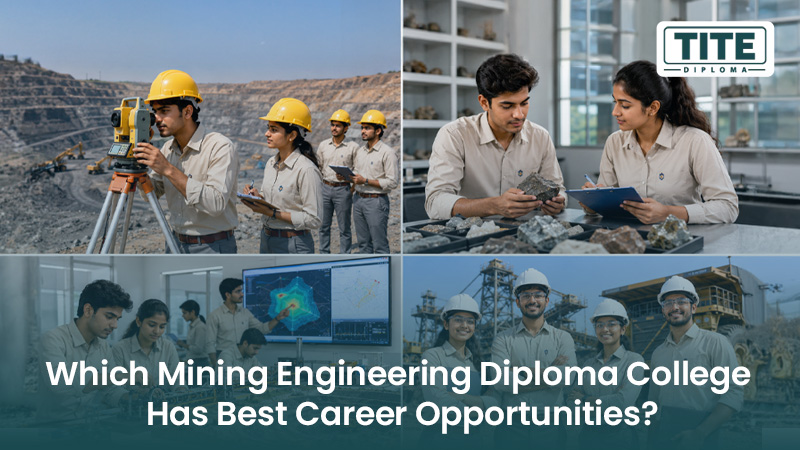
.jpg) Mining Engineering Diploma Course With Practical Field Training August 21, 2026
Mining Engineering Diploma Course With Practical Field Training August 21, 2026 -
-